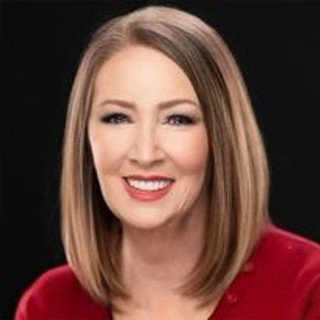
Relying solely on data, analysis, or conventional strategies often left critical gaps in decision-making. There was another layer—an inner knowing, a quiet voice that consistently guided me toward choices that felt aligned and effective. This voice is intuition. It is not vague or random; it is a subtle, precise form of guidance that, when acknowledged, can bring clarity and confidence in both personal and professional decisions.
I combine years of professional training in controlled remote viewing (CRV), medical intuition, mediumship, life and business coaching, and scientific disciplines with over 20 years of practical experience. I have also drawn on the unique gifts and insights I gained through my own near-death out-of-body experiences (NDE/OBE), integrating these abilities with structured training to help clients worldwide navigate complex real-life business and personal decisions.
How Intuition Shapes My Work
Intuition is central to how I approach business strategy, personal development, health-related awareness, and relationship dynamics. It functions as an integrative faculty—connecting lived experience, formal training, and refined perceptual insight—to provide a broader and more precise understanding of complex situations. Rather than operating in isolation, intuition complements analytical reasoning, allowing deeper context and meaning to emerge.
My professional background includes advanced training in Controlled Remote Viewing (CRV), mediumship, and coaching, supported by profound shifts in awareness from near-death and out-of-body experiences. These combined disciplines have cultivated an exceptional level of clarity and perceptual accuracy, enabling access to information that is frequently beyond the reach of conventional methods alone.
Through this work, I consistently observe how intuitive insight brings underlying patterns into focus, identifies emerging opportunities, and clarifies solutions that may remain obscured by logic alone. This approach allows me to offer guidance that is discerning, grounded, and impactful—supporting thoughtful decision-making and meaningful, lasting change for those I work with.
Real-Life Applications
Over nearly two decades, I have assisted clients around the world in making critical business decisions, managing complex personal challenges, and gaining clarity in high-stakes situations. Whether it is evaluating opportunities, navigating partnerships, or responding to unexpected challenges, intuition combined with structured training has consistently provided precise, actionable insight.
By integrating intuitive perception, CRV, mediumship, and coaching techniques, I can uncover underlying dynamics, reveal hidden opportunities, and guide clients in aligning their decisions with their goals and values. The results often go beyond immediate problem-solving, offering long-term clarity and empowerment.
Embracing Intuition as a Practice
For me, intuition is not a replacement for logic or analysis—it is a complement. It works best when integrated with experience, knowledge, and careful observation. Through years of professional training and the gifts I gained from my NDE/OBE, I have refined my ability to recognize subtle signals, impressions, and insights, translating them into practical guidance. This approach allows me to address complex business, personal, and strategic challenges with confidence, precision, and perspective.
Final Thoughts
Trusting intuition has been central to my personal and professional journey. By combining rigorous professional training with the extraordinary insights from my NDE/OBE, I help clients around the world uncover unseen dynamics, identify hidden opportunities, and make decisions with clarity and confidence. Intuition, when integrated with expertise, training and experience, provides a powerful tool for navigating life and business complexities, empowering my clients to act with precision and achieve meaningful transformation.
Disclaimer
Information provided cannot guarantee 100% accuracy. Services do not replace advice from legal, financial, medical, psychological or other professionals. No guarantees are made regarding outcomes. If your pre-session form indicates the service is not appropriate, the booking fee will be refunded. Appointments can be rescheduled. Refunds and chargebacks are not permitted.